Residential Turf Installation in Arlington, TX
Custom artificial turf solutions designed specifically for residential properties and homeowners.
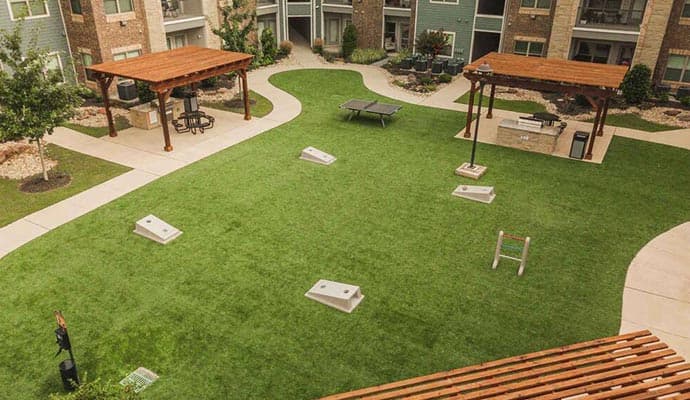
Residential turf installation transforms home lawns throughout Arlington into beautiful, functional outdoor spaces that enhance property value, reduce maintenance burdens, and provide year-round enjoyment for families. Homeowners choose artificial turf to address the common frustrations of maintaining natural grass in North Texas climate including constant watering during hot summers, ongoing expense of lawn care services, persistent weed problems, brown patches and bare spots, and muddy areas that limit outdoor use. Professional residential turf installation delivers more than just synthetic grass laid over existing ground. The service encompasses comprehensive evaluation of your specific property, thorough site preparation addressing drainage and soil conditions, strategic planning for optimal appearance and performance, expert installation using proven techniques, and careful finishing that integrates turf seamlessly with your existing landscape. The challenges that residential turf installation solves are substantial for Arlington homeowners. Our climate stresses natural grass with intense heat, periodic drought restrictions, and unpredictable rainfall patterns. Many homes have soil conditions ranging from heavy clay that drains poorly to sandy areas where grass struggles to establish. Shade from structures or trees creates zones where natural grass cannot thrive. The cost and time commitment for proper lawn maintenance continues year after year, including weekly mowing during growing season, regular fertilization and weed control, irrigation system operation and repairs, seasonal treatments, and professional services if you lack time or equipment to handle maintenance yourself. Residential turf eliminates these burdens while providing consistent beauty that enhances your home's curb appeal and creates inviting outdoor spaces. Families with children gain safe, clean play areas without mud, grass stains, or allergy concerns. Pet owners appreciate durable surfaces that resist wear from dogs while remaining cleaner and more sanitary than damaged natural lawns. Homeowners reclaim weekends previously spent on yard work and redirect monthly lawn care budgets toward other priorities. Water conservation reduces utility bills significantly while supporting responsible resource management. This comprehensive guide explains everything you need to know about residential turf installation for Arlington homes, including what the process involves from start to finish, how residential applications differ from commercial installations, factors that influence investment cost for your project, and detailed answers to common questions homeowners ask when considering artificial turf for their properties.
What Residential Turf Installation Covers
Our residential turf installation service provides complete transformation of your lawn area from initial consultation through finished, ready-to-enjoy outdoor space. We handle every aspect of the project so you receive professional results without managing multiple contractors or tasks.
- •In-Home Consultation and Property Assessment - Visit your home to discuss your goals, frustrations with current lawn, and expectations for artificial turf, evaluate yard conditions including drainage patterns, soil type, sun exposure, and problem areas, measure installation area precisely for accurate proposals, and review product options suited to residential use and your budget preferences
- •Existing Lawn Removal and Site Clearing - Strip existing grass, weeds, and vegetation from installation area using appropriate equipment for project size, excavate to depth required for proper base installation typically three to four inches below final grade, remove organic materials, roots, rocks, and debris that could affect finished surface, and haul all excavated materials away from your property leaving clean work area
- •Grade Correction and Surface Leveling - Establish appropriate drainage slope away from your home foundation and structures, eliminate low spots where water accumulates creating drainage problems, remove high areas and inconsistent surface elevation, compact native soil to prevent future settling, and create smooth, consistent base for artificial turf installation
- •Residential Drainage Solutions - Install French drains along home foundation or low areas to manage water effectively, add catch basins or surface drains where water naturally collects, integrate drainage with existing yard systems and downspouts, ensure water flows away from structures and off turf surface, and address clay soil or poor drainage conditions common in Arlington residential properties
- •Crushed Stone Base Installation - Spread high-quality decomposed granite or crushed aggregate base material to specified depth across installation area, level base to maintain proper drainage grade, compact base material in layers using professional equipment achieving density that prevents settling over time, and create stable, permeable foundation that supports turf and allows water drainage to soil below
- •Professional-Grade Weed Barrier - Install commercial landscape fabric across entire base area to prevent weed growth through artificial turf, overlap fabric at seams to eliminate gaps where weeds might penetrate, secure fabric to base preventing displacement during turf installation, and ensure fabric permeability for water drainage while blocking vegetation from reaching surface
- •Artificial Turf Selection and Installation - Lay residential-grade artificial turf selected for realistic appearance, soft feel, and durability for family use, orient turf direction toward primary viewing angles such as front of home or patio areas for optimal appearance, position turf to minimize seam visibility in high-traffic or prominent areas, allow turf to relax before cutting ensuring proper fit without tension or buckling, and trim around landscape features, borders, and obstacles for precise integration
- •Invisible Seam Construction - Join multiple turf sections where required using professional seaming techniques and materials, align turf edges precisely with matching grain direction for continuity, apply seam tape or adhesive systems appropriate for residential installation conditions, and brush fibers across seam lines to conceal joints creating seamless appearance throughout yard
- •Secure Perimeter Fastening - Fasten artificial turf around entire installation perimeter using galvanized landscape spikes or staples, secure turf at hardscape transitions including concrete, pavers, and pathways, ensure turf edges along planting beds, fences, and borders are firmly attached, and verify turf is properly tensioned without waves, wrinkles, or loose areas that could create trip hazards or visual irregularities
- •Infill Material Application and Distribution - Apply silica sand, antimicrobial infill for pet areas, or other infill products appropriate for residential application, distribute infill evenly across turf surface using professional spreaders, brush infill into turf fibers using power brooms to support blades and create natural upright appearance, and verify proper infill depth for optimal performance, comfort, and visual realism
How Residential Turf Installation Works
Installing artificial turf at your Arlington home follows a systematic process designed to deliver professional results that look beautiful, drain properly, and perform reliably for your family. Understanding each phase helps you know what to expect during your project.
Initial Home Visit and Project Planning
Your residential turf project begins with consultation at your home where we assess your property and discuss your specific needs. We walk your yard together while you explain frustrations with your current lawn, areas that concern you most, how you use your outdoor space, and what you hope to achieve with artificial turf. We examine drainage patterns by looking for areas where water stands after rain, soil conditions by evaluating texture and composition, sun exposure and shade patterns throughout the day, existing landscape features including trees, planting beds, and hardscape elements, and access for equipment and materials. We take detailed measurements of installation area and note irregular borders, obstacles, and transitions. Based on this evaluation, we recommend artificial turf products suited to your application, whether general landscape turf for front and back yards, pet-specific products if you have dogs, or specialized turf for play areas or putting greens. We discuss realistic expectations for appearance, feel, and performance, explain the installation process and typical timeline, and provide comprehensive written proposal outlining scope of work and investment required for your project.
Preparation and Existing Lawn Removal
Installation begins by removing your existing lawn and preparing the area for artificial turf. We use sod cutters for efficient grass removal on typical residential yards, or small excavation equipment for larger properties or difficult conditions. Existing grass, weeds, and vegetation are stripped from the installation area along with sufficient soil depth to accommodate base material, typically three to four inches of excavation. All organic material must be removed because decomposing grass and roots beneath artificial turf can create depressions as material breaks down over time. If you have an irrigation system in the yard, we carefully remove or cap sprinkler heads and lines that serve the area being converted to turf. The excavated area is then graded to correct drainage issues, sloping surface away from your home foundation, eliminating low spots where water collects, and creating consistent elevation across the yard. Native soil is compacted to provide firm foundation that will not settle and cause surface irregularities later.
Drainage Infrastructure and Base Preparation
Proper drainage is essential for artificial turf performance and longevity, particularly in Arlington where heavy rains occasionally occur and many homes have clay soil that drains poorly. Based on conditions observed during initial assessment, we install drainage solutions appropriate for your property. This might include French drains along your home's foundation or yard perimeter, catch basins in low areas, channel drains to intercept water flow, or other systems to manage water effectively. Drainage components are positioned to direct water away from your home and off the turf surface, connecting to your existing drainage system or suitable discharge location. After drainage infrastructure is installed, we spread crushed aggregate base material across the entire installation area. This base, typically decomposed granite or similar crushed stone, is placed in layers and compacted thoroughly using professional plate compactors. Proper compaction creates stable foundation that prevents settling while maintaining permeability for water to drain through to soil below. We verify grade and elevation across the installation area ensuring consistent slope for drainage and smooth surface preparation.
Weed Prevention and Turf Positioning
Once the base is properly prepared, we install commercial-grade landscape fabric across your entire yard area being converted to artificial turf. This geotextile fabric creates a barrier preventing weeds from growing up through the turf while allowing water to pass through freely for drainage. Fabric sections are overlapped and secured to prevent gaps and movement. Artificial turf is then carefully positioned across the installation area. For front yards, we orient turf direction so it looks lush and inviting when viewed from the street. In back yards, we consider primary viewing angles from patios, decks, or windows. If your installation requires multiple pieces of turf, we plan seam locations to keep them in low-visibility or low-traffic areas where possible. All turf sections are laid with matching grain direction so color and texture appear consistent across the entire yard. We allow the turf to relax and flatten naturally before proceeding with cutting and fastening, ensuring proper fit without tension that could cause buckling or gaps.
Seaming, Fastening, and Edge Integration
Creating invisible seams where turf sections meet requires careful technique and proper materials. We trim turf edges precisely where they join, ensuring perfect alignment with grain matching for visual continuity. Professional seaming tape or adhesive is applied to join sections securely while positioning fibers to hide the seam line. After seaming is complete, the turf is secured around the entire perimeter of your yard using galvanized landscape spikes or staples driven through the backing into the base below. Fasteners are placed at appropriate intervals to hold turf firmly while avoiding visible indentations. Edges receive particular attention where turf meets your home's foundation, existing concrete or paver surfaces, planting beds, fences, or other borders. We trim edges precisely and fasten them securely so turf integrates cleanly with existing landscape elements and remains secure despite foot traffic, weather exposure, or lawn equipment used on adjacent areas.
Infill Application and Final Preparation
After all turf is secured, we apply infill material that serves multiple purposes including supporting turf blades so they stand upright naturally, adding weight to keep turf in place, providing slight cushioning for comfort, and helping turf maintain appearance under traffic and weather exposure. For general residential landscape applications, we typically use silica sand infill. If you have pets, we may recommend antimicrobial infill that resists odor and bacterial growth. Infill is distributed evenly across the surface and worked into turf fibers using power brooms, which also help stand fibers upright for natural appearance. The completed installation is thoroughly inspected for seam quality, edge security, consistent infill distribution, and overall appearance. We brush the entire surface to optimize visual presentation and verify drainage performance. Your yard is cleaned of any remaining debris, and we review care and maintenance recommendations with you so you understand how to keep your new artificial turf looking its best. The installation is ready for immediate use, providing your family with beautiful, functional outdoor space to enjoy.
Residential Turf Applications We Install
Artificial turf serves diverse purposes throughout residential properties. Our installation expertise covers the full spectrum of home applications, with approaches tailored to how you and your family use outdoor spaces.
Front Yard Installations
Front yard artificial turf creates impressive curb appeal while eliminating the most visible and demanding lawn maintenance. Homeowners choose front yard turf to establish pristine appearance that remains consistent regardless of season or weather, eliminate weekly mowing that consumes weekend time, avoid brown patches or bare spots that detract from home appearance, reduce water consumption and utility costs significantly, and increase property value through improved landscaping. Front yard installations emphasize realistic appearance with premium turf products featuring varied blade colors and textures that look natural from street view. We carefully plan turf orientation so it appears lush when viewed from the street and by visitors approaching your home. Edge integration with driveways, walkways, planting beds, and foundation areas receives particular attention for clean, professional appearance. Front yard turf often combines with decorative rock, planting beds with drought-tolerant plants, and hardscape features to create complete low-maintenance landscape design that enhances your home's exterior appearance while reducing ongoing care requirements.
Back Yard Transformations
Back yard artificial turf creates usable outdoor living space where families can enjoy time outside without mud, maintenance, or the limitations natural grass imposes. Back yards serve diverse purposes from children's play areas to entertainment spaces to pet exercise areas, and artificial turf adapts to all these uses. Installation creates clean surface without muddy patches even after rain, eliminates grass staining on children's clothing and toys, provides safe play surface without pesticides or fertilizers, creates comfortable outdoor living area for furniture and activities, and dramatically reduces time spent on yard work allowing more time to actually enjoy your outdoor space. Back yard installations often incorporate features such as dedicated pet areas with antimicrobial turf, putting greens for golf practice, play zones for children with impact padding beneath turf for safety, and integration with patios, decks, and outdoor kitchens. We work with existing landscape elements including trees, planting beds, and water features, creating cohesive outdoor environment that balances artificial turf with natural elements for aesthetic appeal and functionality.
Side Yard Problem Solving
Side yards frequently present challenges for natural grass due to shade from structures, narrow spaces where mowing is difficult, heavy foot traffic along pathway routes, or poor soil and drainage conditions. Artificial turf solves these common problems while creating more attractive, usable transition spaces between front and back yards. Side yard turf eliminates muddy paths that track into homes, creates clean surface in high-traffic areas between gates and doors, improves appearance in narrow spaces visible from street or neighboring properties, and provides ground cover in shade where grass cannot establish. These installations often involve working in tight spaces with limited equipment access, requiring hand-carrying materials and using smaller tools. We address drainage carefully in side yards where water from roofs or adjacent areas concentrates, installing channel drains or French drains as needed. Side yard turf frequently integrates with gates, utility areas, air conditioning units, and pathways, requiring precise cutting and fitting around numerous obstacles.
Pet-Friendly Yard Installations
Homeowners with dogs find artificial turf transforms their relationship with their yard, solving the frustration of natural grass damaged by pet traffic, digging, and waste. Pet-specific residential turf installation uses products designed specifically for animal use including antimicrobial infill materials that resist bacterial growth and control odor naturally, backing systems with enhanced drainage allowing liquid waste to pass through quickly, and durable fiber construction that withstands scratching, digging, and intensive traffic from active dogs. Pet yard installations often include enhanced base drainage capacity particularly important for homes with multiple dogs or large breeds, secure perimeter fastening along fence lines where dogs commonly dig, and full yard coverage eliminating mud and dirt that pets track indoors. The result is clean, sanitary outdoor space where dogs can exercise and play without destroying your yard, while you gain easier cleanup, elimination of brown spots and bare patches from pet urine, reduction in dirt and grass tracked into your home, and ability to maintain attractive yard despite having active pets. Many homeowners report that pet turf is one of the best improvements they make for both their animals and themselves.
Why Homeowners Choose Professional Residential Turf Installation
The quality of artificial turf installation directly impacts how your lawn looks, performs, and lasts for years to come. Professional installation ensures you receive full value from your investment rather than experiencing problems that result from inadequate preparation or inexperienced installation. Residential turf installation requires expertise specific to home applications. We understand that proper drainage is critical in residential yards where poor drainage can affect not just turf performance but also your home's foundation. Our installation approach addresses existing drainage issues, corrects grading problems, and installs infrastructure that protects your property while ensuring turf performs optimally. Base preparation receives meticulous attention because it forms the foundation that determines whether your turf remains smooth and level or develops depressions and irregularities over time. We use professional compaction equipment and proven techniques rather than shortcuts that save time initially but create problems later. Product selection for residential applications balances appearance, comfort, durability, and budget. We help you choose turf appropriate for your specific use whether general landscape, pet area, play surface, or specialty application, explaining realistic expectations for different product options. Installation techniques ensure natural appearance through careful seam planning and construction, proper turf orientation for viewing angles specific to your property, precise edge work integrating turf with your home's landscape elements, and attention to details that distinguish professional results from amateur installations. We maintain clear communication throughout your project, arriving on schedule, completing work efficiently, addressing your questions and concerns, and leaving your property clean each day. Our familiarity with Arlington residential properties, common soil and drainage conditions, and typical challenges allows us to work efficiently while anticipating potential issues before they become problems. We recognize that your home is your largest investment and that landscaping significantly affects both enjoyment and value. Every residential turf installation receives the care and professionalism that investment deserves, resulting in beautiful outdoor space you will enjoy for many years with minimal maintenance.
What Affects Residential Turf Installation Pricing
Investment for residential artificial turf installation varies based on your specific property, project scope, and product selection. Understanding pricing factors helps you plan appropriately and make informed decisions about your home improvement project.
Yard Size and Coverage Area
Total square footage of turf installation directly impacts material and labor costs. Typical residential front yards range from 500 to 1,500 square feet, while back yards vary from 1,000 to 3,000 square feet or more depending on lot size. Larger installations require more turf product, base materials, infill, and labor hours but often achieve better per-square-foot pricing due to economy of scale. Very small installations such as narrow side yards or small pet areas may have relatively higher per-unit costs due to minimum service charges and efficiency limitations. Measuring your yard accurately during consultation ensures precise pricing rather than rough estimates that may not reflect actual costs.
Property Conditions and Site Preparation
Existing conditions at your home significantly influence preparation requirements and project costs. Homes with relatively level yards, reasonable drainage, and accessible installation areas require less work than properties with significant slope requiring extensive grading, poor drainage necessitating substantial drainage systems, rocky or clay soil that is difficult to excavate and compact, or limited access requiring hand-carrying materials through gates or narrow passages. Properties where existing sprinkler systems must be removed and capped add to preparation costs. Homes with numerous landscape features, trees with root systems requiring management, or other obstacles increase installation complexity. The current condition of your lawn also matters, with simple grass removal being less costly than removing established landscape beds or existing hardscape that must be worked around or modified.
Turf Product Quality and Type
Artificial turf products range from basic to premium with corresponding price differences. Entry-level landscape turf provides functional coverage at lower cost but may have simpler appearance, less soft feel, and shorter warranties. Mid-range products offer better realism with varied blade colors and textures, softer fibers, and improved durability. Premium residential turf features the most realistic appearance, luxuriously soft feel, dense construction, superior backing systems, and longest manufacturer warranties. Specialized products for specific applications such as pet turf with antimicrobial properties, putting green surfaces, or playground turf with integrated padding carry different pricing structures. The product you select significantly affects material costs for your project, and we help you understand tradeoffs between options so you can choose turf that fits your priorities and budget.
Installation Complexity and Custom Features
Straightforward residential installations with simple rectangular shapes, minimal obstacles, and standard requirements are less costly than complex projects. Factors increasing installation difficulty and cost include irregular yard shapes with numerous curves and angles, multiple obstacles such as trees, planting beds, utilities, and landscape features, tight spaces or intricate areas requiring detailed work, combining different turf types such as putting greens with surrounding landscape turf, creating custom designs or patterns, and working around extensive hardscape including patios, pathways, and decorative elements. Each complexity factor increases labor time and material waste, affecting overall project investment.
Drainage System Requirements
Some homes have naturally good drainage requiring minimal enhancement, while others need substantial drainage infrastructure. Requirements depend on soil type with clay soil common in Arlington needing more intervention than sandy soil, yard topography and natural water flow patterns, proximity to home foundation requiring protection from water intrusion, and existing drainage problems such as areas where water stands after rain. Homes requiring French drains along foundation or perimeter, catch basins in low spots, channel drains across surfaces, or extensive grading modifications involve additional materials and labor increasing project costs. However, proper drainage is essential for long-term turf performance and protection of your home, making it a critical investment rather than optional expense.
Edge Treatments and Finishing Details
Perimeter finishing ranges from basic to elaborate depending on your preferences and existing landscape. Simple edge treatment using bender board or landscape stakes represents economical approach that secures turf adequately. Upgraded options include decorative borders with timber, stone, or metal edging, raised borders creating elevation transitions, integration with extensive hardscape such as paver borders or decorative rock, and custom edge solutions for unique landscape features. The amount of linear edge relative to installation area also affects costs, with highly irregular yard shapes requiring more edge work per square foot than simple, consolidated areas. We discuss edge finishing options during consultation so you can select approach that matches your aesthetic preferences and budget.
Service Area Coverage
We install residential artificial turf throughout Arlington and all surrounding communities in Tarrant County and nearby areas. Our service area includes Mansfield, Grand Prairie, Arlington Heights, Cedar Hill, Duncanville, Desoto, Midlothian, Waxahachie, Alvarado, Burleson, Crowley, Kennedale, Forest Hill, Venus, Cleburne, Godley, and Stephenville. We are familiar with the residential characteristics, common property conditions, soil types, and drainage challenges throughout this region, allowing us to provide effective solutions regardless of your specific location. Whether your home is in an established Arlington neighborhood or one of the surrounding communities, you receive the same professional service and quality installation.
Related Services
Artificial Turf Installation
Professional artificial turf installation for residential and commercial properties with complete base preparation.
Learn More →Synthetic Grass Installation
High-quality synthetic grass installation services for durable, low-maintenance landscapes.
Learn More →Commercial Turf Installation
Durable commercial-grade artificial turf installation for business properties and high-traffic areas.
Learn More →Pet Turf Installation
Pet-friendly artificial turf designed for durability, drainage, and easy cleaning in pet areas.
Learn More →Frequently Asked Questions About Residential Turf Installation
Is artificial turf safe for children and pets?+
Modern residential artificial turf is designed with safety as a primary consideration, making it an excellent choice for families with children and pets. Quality turf products use non-toxic materials including polyethylene or nylon fibers that are skin-safe and pet-safe. Turf is free from the pesticides, herbicides, and fertilizers that natural lawns require for maintenance, eliminating chemical exposure concerns for children and animals who play on the surface. The infill materials we use such as silica sand or specialized antimicrobial products for pet areas are non-toxic and safe for contact. For play areas, artificial turf can be installed over shock-absorbing pads that provide impact protection, reducing injury risk from falls more effectively than natural grass or hard surfaces. The surface remains consistently level without holes, ruts, or uneven areas that could cause trips and falls. Artificial turf does not harbor pests such as ticks or fleas that may live in natural grass, and it eliminates allergens from grass pollen that affect some children. For pets, turf provides clean surface that does not become muddy, reducing tracking of dirt and bacteria into your home. Modern turf products meet safety standards and are tested for heavy metal content and other potential hazards. Many families report that artificial turf creates safer, cleaner play environment for their children and pets compared to natural grass.
How much does residential turf installation cost for a typical Arlington home?+
Residential artificial turf installation costs vary based on specific property characteristics, but typical Arlington homes invest between five thousand and twenty thousand dollars depending on project scope. A standard front yard installation of 800 to 1,000 square feet with moderate site preparation generally ranges from seven thousand to twelve thousand dollars. Back yard installations averaging 1,500 to 2,000 square feet typically cost twelve thousand to twenty thousand dollars or more depending on drainage requirements and product selection. Very small projects such as side yards or designated pet areas of 200 to 400 square feet might range from three thousand to five thousand dollars. Cost factors include total square footage with larger installations having better per-unit pricing, site conditions such as drainage problems or access limitations that increase preparation requirements, turf product quality with premium products costing more than basic options, installation complexity including obstacles and irregular shapes, and extent of drainage infrastructure needed. The most accurate approach is scheduling a consultation at your home where we can assess your specific property, measure precisely, evaluate conditions, discuss your preferences, and provide detailed proposal based on actual requirements rather than general averages. Most homeowners find that artificial turf installation pays for itself over time through elimination of ongoing lawn care costs, water savings, and increased property value.
Will artificial turf increase my home's property value?+
Artificial turf can enhance property value through multiple mechanisms, though the impact varies based on implementation and local market factors. Quality artificial turf installation improves curb appeal substantially, creating consistently beautiful lawn that remains green and pristine year-round rather than showing brown patches, bare spots, or seasonal dormancy. This visual appeal makes positive first impression on potential buyers and contributes to overall property presentation. Artificial turf reduces ongoing maintenance costs and time commitment, which appeals to buyers seeking low-maintenance homes particularly busy professionals or retirees who do not want yard work demands. Water conservation is increasingly valued in our climate, and artificial turf demonstrates environmental responsibility while reducing utility costs. The investment in professional artificial turf installation can be partially or fully recovered at sale time when presented as quality improvement. However, value impact depends on factors including quality of installation with professional results contributing more value than poor amateur installations, appropriateness for the neighborhood and property with high-end turf in upscale areas adding more value than basic products, buyer preferences varying by demographic and lifestyle, and local market conditions. Some buyers specifically seek homes with artificial turf while others prefer natural lawns, so impact varies. Most real estate professionals suggest that well-executed artificial turf installation in front yards significantly enhances curb appeal and marketability, while back yard turf appeals to specific buyer segments particularly families with pets or active lifestyles.
How long does it take to install artificial turf at a residential property?+
Most residential artificial turf installations are completed in two to five days depending on project size and complexity. A typical front yard of 800 to 1,000 square feet generally takes two to three days from start to finish. Back yard installations of 1,500 to 2,000 square feet usually require three to five days. Very small projects such as side yards might be completed in one to two days, while large or complex installations could take a week or more. The timeline includes site preparation and excavation removing existing grass and preparing base, drainage installation if required for your property, base material installation and compaction which may require curing time, artificial turf layout and installation, seaming and edge work, infill application and surface preparation, and final inspection and cleanup. Weather affects scheduling, particularly during excavation and base preparation stages when rain can delay work. We provide project-specific timeline during consultation once we understand your property and scope of work. Most installations are completed consecutively without significant gaps, though we schedule around weather and occasionally stage work if needed for access or other considerations. During installation, portions of your yard will be inaccessible, but we work efficiently to minimize disruption to your household and complete your project as quickly as quality allows.
What maintenance does residential artificial turf require?+
Residential artificial turf maintenance is minimal compared to natural lawns, requiring just minutes weekly rather than hours. Regular maintenance includes removing leaves, twigs, and debris using a leaf blower or light rake, typically done weekly or as needed based on nearby trees and wind patterns. Occasionally rinse the turf with a garden hose to wash away dust and pollen, particularly during dry periods or after storms. High-traffic areas such as pathways or play zones benefit from periodic brushing using a stiff broom or power broom to stand fibers upright and redistribute infill, generally needed every few months depending on use. Address spills or stains promptly with water or mild soap solution, though most substances rinse away easily. For households with pets, remove solid waste regularly and rinse areas where pets urinate to prevent odor accumulation, with weekly or bi-weekly use of enzyme cleaners designed for artificial turf if desired. Annual maintenance includes thorough cleaning of the entire surface using a hose and stiff brush or professional turf cleaning services, inspecting edges to ensure turf remains secured and borders are intact, checking infill levels and adding material if needed in high-traffic areas where it becomes displaced, and pulling any weeds that appear along edges where turf meets soil or planting beds. Compared to natural lawn care that requires weekly mowing, regular watering, periodic fertilizing, seasonal aeration, weed control, and ongoing expense for services or products, artificial turf maintenance represents dramatic reduction in both time commitment and cost. Most homeowners spend less than one hour monthly on turf maintenance compared to four to eight hours monthly for natural lawn care.
Can I install artificial turf myself or should I hire a professional?+
While do-it-yourself artificial turf installation is possible, professional installation offers significant advantages that affect long-term results and satisfaction. Artificial turf installation appears deceptively simple but involves critical technical elements that determine performance. Proper site evaluation identifies drainage issues, soil conditions, and site-specific factors that inexperienced installers may overlook until problems appear months later. Base preparation is the most critical phase, requiring correct excavation depth, appropriate base material selection, thorough compaction using professional equipment, and proper grading for drainage. Inadequate base preparation causes the majority of turf problems including surface depressions from settling, poor drainage creating odor or backing damage, and premature wear. Professional seaming creates invisible joints between turf sections, while amateur seams are often visible and may separate over time. Edge work requires proper tensioning and securing to prevent lifting, buckling, or gaps. Professional installers have specialized equipment including plate compactors that achieve proper base density, power brooms for infill application, seaming tools and materials, and experience working efficiently while achieving quality results. DIY installation requires purchasing or renting equipment, learning techniques through trial and error on your property, and physical labor over multiple days or weeks. Mistakes in DIY installation can be costly to repair, sometimes requiring complete removal and reinstallation to correct fundamental problems with base preparation or drainage. Most homeowners who attempt DIY installation significantly underestimate the time, effort, and difficulty involved. Professional installation provides warranty protection for workmanship, proper techniques ensuring long-term performance, efficient completion saving you time and physical effort, and results that look professionally finished rather than amateur. For most homeowners, professional installation represents better value when considering total cost including materials, equipment, time, physical effort, and risk of costly mistakes that require remediation.
Does artificial turf work in shaded areas where grass won't grow?+
Artificial turf is an excellent solution for shaded areas where natural grass struggles or fails to grow, solving one of the most frustrating landscaping challenges for Arlington homeowners. Natural grass requires substantial sunlight for photosynthesis and healthy growth, with most turf grasses needing at least four to six hours of direct sun daily. Areas shaded by structures, mature trees, or neighboring properties often cannot support healthy grass growth, resulting in thin, weak grass, bare patches, moss or algae growth, and persistent problems despite overseeding and maintenance efforts. Artificial turf does not require sunlight for performance, providing consistently beautiful surface in full shade, partial shade, or full sun equally well. Shaded installation areas actually offer some advantages including reduced surface temperature during summer since shade prevents intense sun exposure, potentially longer turf life due to reduced UV exposure, and often better moisture conditions that may reduce dust accumulation. Installation in shaded areas follows the same process as sunny locations, though drainage considerations may differ since shaded areas sometimes retain moisture longer and may have different water flow patterns. If shade is caused by tree canopy, we address any root management needed during base preparation and plan for ongoing leaf removal as part of maintenance. Artificial turf in shaded side yards, under decks or patios, beneath tree canopies, or along north sides of structures transforms problem areas into attractive, functional spaces that integrate with your overall landscape rather than detracting from it with bare dirt or struggling grass.
What happens to my existing sprinkler system when installing artificial turf?+
Existing irrigation systems in areas being converted to artificial turf must be removed or deactivated since turf does not require watering. During site preparation, we carefully remove sprinkler heads and lateral lines from the installation area, cap main lines at appropriate locations to prevent leaks and water waste, and preserve irrigation system functionality for other areas of your property if desired. If your sprinkler system serves only the area being converted to turf, the entire system can be deactivated and abandoned in place or removed entirely depending on preference. If the system also waters planting beds, remaining grass areas, or other landscape that you want to preserve, we cap lines serving the turf area while maintaining operation for other zones. Sprinkler system modifications are included in our installation service, though extensive irrigation work or complex systems may affect project cost. Some homeowners choose to maintain irrigation system in deactivated state in case future owners might want to convert back to natural grass, while others prefer complete removal. After artificial turf installation, you save substantially on water bills since irrigation is eliminated for the turf area. Many Arlington homeowners report monthly water savings of fifty to seventy-five dollars or more during summer months, with savings varying based on previous lawn size and watering patterns. Over the lifespan of artificial turf, water savings alone can offset significant portion of installation investment while supporting water conservation during drought periods.
Ready to Get Started?
Contact us today for a free quote on residential turf installation in Arlington, TX.