Artificial Turf Installation in Arlington, TX
Professional artificial turf installation for residential and commercial properties with complete base preparation.

Artificial turf installation transforms outdoor spaces in Arlington, Texas, providing property owners with lush, green surfaces that require minimal maintenance while delivering year-round beauty and functionality. Whether you are a homeowner tired of brown patches and constant lawn care, or a business owner seeking to enhance your property's curb appeal without the ongoing expense of landscaping services, professional artificial turf installation offers a practical, long-lasting solution. This service goes far beyond simply laying down synthetic grass. It involves comprehensive site preparation, precise grading and drainage planning, careful selection of turf products matched to your specific needs, professional installation techniques that ensure longevity and performance, and finishing touches that create a seamless, natural appearance. The challenges that artificial turf installation solves are significant. Arlington's climate presents difficulties for natural grass, including intense summer heat, periodic drought conditions, and varying soil quality across different neighborhoods. Traditional lawns demand constant watering, regular mowing, fertilization, pest control, and seasonal maintenance that consumes both time and money. Artificial turf eliminates these burdens while providing consistent aesthetic appeal regardless of weather conditions. For commercial properties, artificial turf reduces ongoing maintenance costs, eliminates the need for noisy lawn equipment during business hours, and creates inviting outdoor spaces that enhance customer experience. For residential applications, families gain usable outdoor space without muddy patches, safer play areas for children and pets, and significant water conservation. This page provides detailed information about our artificial turf installation services in Arlington and surrounding communities, including what the process involves, different applications we serve, factors that influence project costs, and answers to common questions about choosing and installing artificial turf for your property.
What Our Artificial Turf Installation Includes
Professional artificial turf installation is a comprehensive process that ensures your synthetic grass surface performs beautifully for years to come. Our installation service covers every aspect of the project from initial site preparation through final cleanup, with attention to detail at each stage ensuring optimal results.
- •Complete Site Assessment and Measurement - Evaluate existing conditions, identify potential drainage issues, measure precise installation area, and determine optimal turf product specifications based on intended use and site characteristics
- •Existing Surface Removal - Remove current grass, weeds, rocks, and debris from the installation area, excavate to proper depth for base materials, and haul away all removed materials from your property
- •Base Preparation and Grading - Level and grade the installation area to ensure proper drainage away from structures, compact soil to create stable foundation, and establish consistent surface elevation throughout the project area
- •Drainage System Installation - Install French drains, catch basins, or channel drains as needed based on site conditions, ensure proper slope for water runoff, and integrate drainage solutions with existing property systems
- •Base Material Installation - Spread and compact crushed aggregate base material to specified depth, create stable foundation that prevents settling and supports turf backing, and ensure uniform compaction across entire installation area
- •Weed Barrier Application - Install commercial-grade landscape fabric to prevent weed growth through turf, secure barrier material to prevent shifting, and ensure complete coverage of installation area
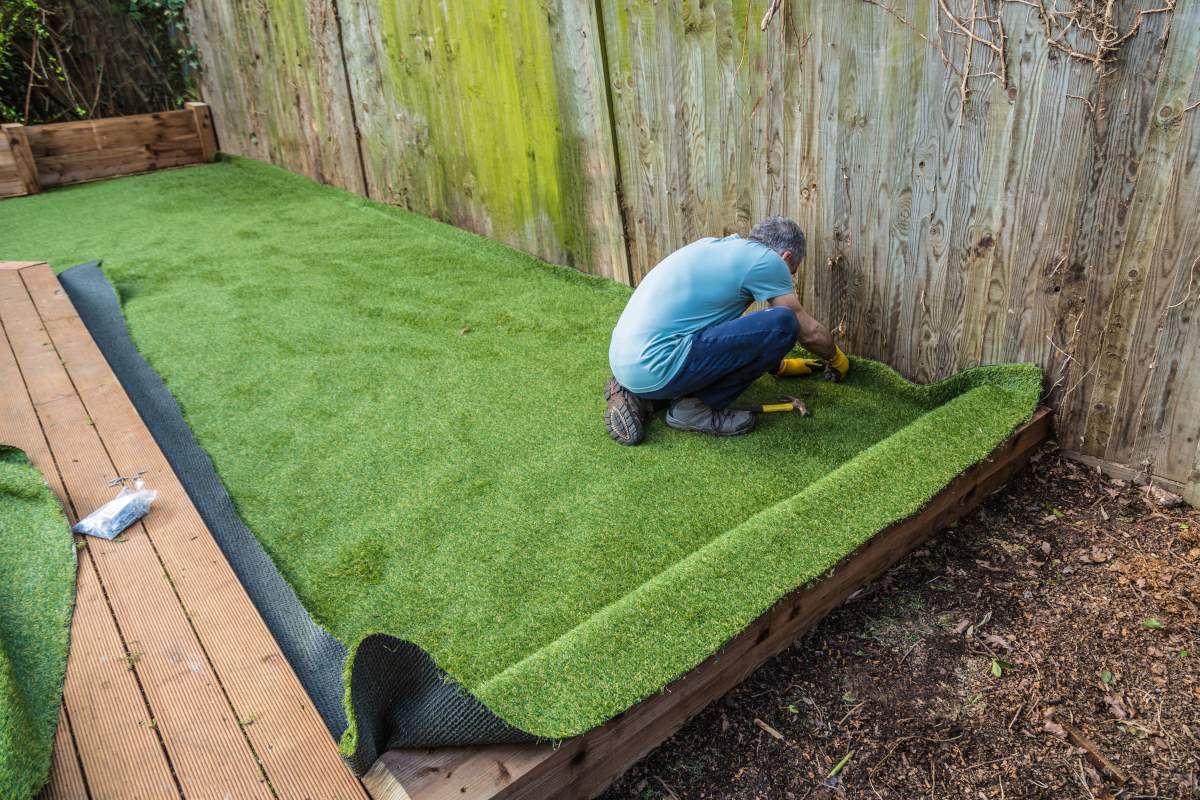
- •Turf Product Installation - Roll out artificial grass in optimal direction for appearance and seam placement, carefully align turf sections for invisible seam lines, secure turf to base using appropriate fastening methods, and trim edges for precise fit around borders and obstacles
- •Seam Construction - Join multiple turf sections using professional seaming techniques, apply seam adhesive or tape for durable connections, and brush fibers to conceal seam locations for natural appearance
- •Infill Application - Spread silica sand, antimicrobial infill, or rubber granules as appropriate for turf product and application, ensure even distribution across entire surface, and brush infill into turf fibers for optimal blade support and realistic appearance
- •Edge Finishing and Securing - Install or secure perimeter materials including bender board, timber edging, or hardscape transitions, fasten turf edges to prevent lifting or movement, and create clean, professional borders around the installation
Our Artificial Turf Installation Process
Installing artificial turf requires careful planning, proper preparation, and precise execution to achieve professional results that last for years. Our systematic approach ensures every project receives the attention to detail necessary for optimal performance and appearance.
Initial Consultation and Site Evaluation
The installation process begins with an on-site consultation where we assess your property, discuss your goals and expectations, and evaluate site-specific factors that influence installation approach. We measure the installation area precisely, identify existing drainage patterns and potential water management challenges, examine soil conditions and current surface characteristics, and discuss turf product options suited to your intended use. During this visit, we answer your questions about artificial turf performance, maintenance requirements, and realistic expectations. We also identify any site obstacles such as sprinkler systems that need removal, tree roots that require management, or grading issues that need correction. This thorough evaluation allows us to develop an accurate project proposal and installation plan tailored to your property.
Site Preparation and Excavation
Proper site preparation forms the foundation for successful artificial turf installation. We begin by removing existing grass, vegetation, and surface materials to the depth required for base installation. This typically involves excavating three to four inches of material, though depth varies based on existing conditions and drainage requirements. All removed materials are hauled away from your property, leaving a clean work area. We then address any grading issues, creating proper slope for water drainage away from structures and eliminating low spots where water might accumulate. If existing irrigation systems are present in the installation area, we remove or cap sprinkler heads and lines as needed. The excavated area is then compacted to create a firm, stable foundation that will not settle over time and cause surface irregularities in the finished turf.
Drainage and Base Installation
Effective drainage is critical for artificial turf performance and longevity. Based on site conditions identified during evaluation, we install drainage solutions such as French drains along perimeters, channel drains in areas prone to water flow, or catch basins in low spots. These drainage features integrate with your property's existing water management systems to direct runoff appropriately. Once drainage infrastructure is in place, we install the crushed aggregate base material, spreading it evenly across the installation area to specified depth. This base material, typically decomposed granite or similar crushed stone, is spread in lifts and compacted using professional plate compactors or rollers. Proper compaction is essential to prevent settling that would create surface depressions. We verify base elevation and slope throughout this process, making adjustments to ensure consistent grade and proper water flow across the entire installation area.
Weed Barrier and Turf Layout
After base preparation is complete, we install commercial-grade weed barrier fabric across the entire installation area. This fabric prevents weed growth from reaching the turf surface while allowing water to drain through to the base and soil below. The barrier is overlapped at seams and secured to prevent shifting during turf installation. We then carefully position artificial turf rolls across the installation area, planning seam locations to minimize visibility and avoid high-traffic zones where possible. Turf direction is chosen to optimize appearance, with blade direction typically oriented toward the primary viewing angle. For installations requiring multiple turf pieces, we carefully align the grain direction so all sections match, ensuring seams will be virtually invisible once construction is complete. Turf is allowed to relax and acclimate before cutting and securing.
Seaming, Securing, and Infill Application
Joining turf sections requires precision to create invisible seams that maintain the natural appearance of the installation. We use professional seaming techniques including adhesive systems or seaming tape appropriate for the specific turf product. Edges are carefully aligned, backing is secured, and fibers are positioned to conceal the seam line. Once all sections are joined, perimeter edges are secured using galvanized nails or staples driven through the turf backing into the base material. Edge securing extends around the entire installation perimeter and any interior borders or transitions. After the turf is completely secured, we apply infill material across the surface. Infill type and quantity depend on the turf product and intended use, ranging from silica sand for landscaping applications to rubber granules for sports surfaces. Infill is spread evenly using drop spreaders or broadcast methods, then worked into the turf fibers using power brooms to ensure proper distribution and blade support.
Edge Finishing and Final Inspection
Professional edge treatment creates clean borders and ensures long-term turf performance. We install or secure perimeter materials such as bender board along curved edges, timber borders for raised applications, or integrate turf edges with existing hardscape elements like pavers, concrete, or decorative rock. All edges are trimmed precisely and secured firmly to prevent lifting or movement. The completed installation receives thorough inspection, checking for consistent infill distribution, proper seam construction, secure edges, and overall appearance. We brush the entire surface to stand turf fibers upright and create optimal aesthetic presentation. Any remaining debris is removed, adjacent surfaces are cleaned, and we verify that drainage performs as designed. The installation area is left ready for immediate use, with information provided about any brief settling period recommended before heavy activity.
Types of Artificial Turf Installation We Provide
Artificial turf serves diverse applications across residential, commercial, and specialty settings. Our installation expertise spans the full range of synthetic grass applications, with techniques and product selection tailored to each specific use case.
Residential Landscape Applications
Home landscape installation is our most common application, transforming front yards, back yards, and side yards into beautiful, maintenance-free outdoor spaces. Residential installations serve multiple purposes including creating pristine lawns without watering or mowing, eliminating muddy areas where natural grass struggles to grow, providing clean play surfaces for children, and offering comfortable outdoor areas for pets without the damage and wear that animals cause to natural grass. We install turf in full-yard applications replacing entire lawns, partial installations targeting problem areas while preserving some natural grass, and specialty areas such as putting greens, bocce courts, or decorative landscape features. Product selection for residential projects emphasizes realistic appearance with varied blade colors and textures that mimic natural grass, soft fiber materials for comfort and safety, and backing systems that provide adequate drainage for typical residential use.
Commercial Property and Business Installations
Commercial properties benefit significantly from artificial turf installation, gaining professional appearance without ongoing maintenance costs and disruption. We serve office buildings seeking attractive landscaping around entrances and common areas, retail centers creating inviting outdoor spaces for customers, apartment complexes reducing maintenance expenses while providing appealing amenities, and business parks establishing cohesive landscape aesthetics across large properties. Commercial installations often involve high-visibility areas where consistent appearance is important regardless of season or weather conditions. We select turf products with enhanced durability for moderate foot traffic, UV resistance for long-term color retention in full sun exposure, and drainage characteristics suited to the site's water management requirements. Installation techniques for commercial projects account for occasional maintenance vehicle access, integration with irrigation systems for surrounding plantings, and edge treatments that complement existing hardscape and architectural elements.
Pet-Friendly Turf Systems
Specialized pet turf installation addresses the unique challenges of households and facilities with dogs and other animals. Pet-specific artificial turf incorporates features including antimicrobial infill materials that resist odor and bacterial growth, backing systems with enhanced drainage to quickly remove liquid waste, and durable fibers that withstand digging, scratching, and heavy traffic from active animals. We install pet turf in residential back yards where dogs play and exercise, designated pet areas within apartment communities, boarding facilities and doggy daycares requiring cleanable outdoor surfaces, and veterinary clinic outdoor spaces. Pet turf installation often includes enhanced base preparation with additional drainage capacity, perimeter securing to resist determined digging, and integration with waste management systems. The result is a clean, sanitary outdoor space for pets that eliminates mud, prevents grass staining on animal coats, and maintains appearance despite heavy use.
Recreational and Sports Applications
Athletic and recreational artificial turf installation creates dedicated play surfaces for various sports and activities. Applications include residential putting greens for golf practice, backyard play areas for children with impact-absorbing padding systems, multipurpose game courts for basketball and other activities with turf surrounds, and custom sports surfaces for specific training needs. Recreational turf products are selected based on intended activity, with putting green turf featuring extremely short pile height and dense construction for true ball roll, playground turf incorporating shock-absorbing pads beneath for safety, and multi-sport surfaces offering durability for diverse activities. Installation for recreational applications requires precise grading to meet performance standards, specialized base construction for shock absorption or drainage as needed, and careful attention to surface consistency that affects athletic performance.
Rooftop and Specialty Installations
Artificial turf adapts to challenging installation environments including rooftops, balconies, patios, and areas where traditional installation methods are not possible. Rooftop installations create usable green space in urban settings, transforming bare rooftops into recreational areas, event spaces, or aesthetic improvements visible from surrounding buildings. These applications require lightweight turf products and base systems that minimize structural load, drainage solutions that integrate with existing roof drainage, and installation methods that protect waterproof membranes beneath. We also install turf on concrete patios and balconies, over existing hardscape that is structurally sound but aesthetically unappealing, and in unique configurations such as indoor-outdoor transitions or vertical applications. Specialty installations demand creative problem-solving for securing turf without penetrating protected surfaces, managing drainage in contained environments, and achieving professional appearance despite installation constraints.
Why Arlington Customers Choose Our Artificial Turf Installation
Selecting the right installation contractor significantly impacts the performance, appearance, and longevity of your artificial turf investment. Our approach to turf installation prioritizes quality workmanship, attention to detail, and professional communication throughout the project. We understand that proper base preparation and drainage installation are fundamental to long-term success, so we never cut corners on the foundational work that customers do not see but that determines how well the turf performs over time. Our installation teams use professional-grade equipment and proven techniques, from plate compactors that achieve proper base density to seaming tools that create invisible joints between turf sections. We take time to properly plan seam locations, orient turf direction for optimal appearance, and integrate edges cleanly with existing landscape elements. Customer communication is central to our process. We discuss project details clearly during consultation, provide realistic timelines and keep you informed of progress, address questions and concerns promptly, and ensure you understand care requirements for your new turf surface. Our familiarity with Arlington's climate, soil conditions, and common property characteristics allows us to anticipate site-specific challenges and adapt our approach accordingly. We recognize that artificial turf installation is a significant investment in your property, and we treat every project with the professionalism and care that investment deserves. The result is artificial turf installation that looks beautiful, drains effectively, resists wear and weather, and provides years of satisfaction with minimal maintenance requirements.
Factors That Affect Artificial Turf Installation Pricing
Artificial turf installation costs vary considerably based on project-specific factors. Understanding these variables helps you make informed decisions and set realistic budget expectations for your project.
Project Size and Scope
Installation area directly impacts project cost through materials and labor requirements. Larger projects require more turf product, base materials, infill, and edge finishing, along with additional labor hours for site preparation, installation, and finishing work. However, larger projects often benefit from better economy of scale, with per-square-foot costs decreasing as project size increases. Very small installations may carry relatively higher per-unit costs due to minimum service requirements and mobilization expenses that are distributed across less area.
Site Conditions and Preparation Requirements
Existing site conditions significantly influence installation costs. Properties with level, well-drained areas require less preparation than sites with poor drainage, significant slope irregularities, rocky soil, or other challenging conditions. Extensive grading work to correct drainage issues, removal of difficult materials like hardpan soil or existing concrete, and installation of drainage infrastructure all increase project costs. Sites with easy access for equipment and material delivery are less expensive than locations requiring hand-carrying materials or using smaller equipment due to access limitations.
Turf Product Selection
Artificial turf products vary widely in price based on quality, features, and performance characteristics. Premium turf with realistic appearance, soft fiber materials, dense construction, and advanced backing systems costs more than basic products. Specialized turf for specific applications such as pet areas with antimicrobial infill, putting greens with precision pile height, or sports surfaces with enhanced durability carries different pricing than standard landscape turf. The choice between different fiber types, backing systems, and warranty coverage affects material costs significantly.
Installation Complexity
Projects with complex shapes, numerous obstacles, tight spaces, or intricate edge details require more labor and generate more material waste than simple rectangular installations. Incorporating curves, working around trees and landscape features, creating custom inlays or patterns, and integrating with multiple hardscape transitions increase installation time and difficulty. Rooftop or elevated installations that require special techniques and materials cost more than standard ground-level projects. Multiple separate areas that require mobilization between locations add to overall project expense.
Drainage System Requirements
Some properties require minimal drainage enhancement because existing site conditions naturally shed water effectively. Other locations need substantial drainage infrastructure including French drains, catch basins, channel drains, or extensive grading modifications to prevent water accumulation. The extent of drainage work needed depends on soil composition, site topography, rainfall patterns in the area, and proximity to structures that must be protected from water intrusion. Properties with clay soil or naturally poor drainage require more extensive and costly drainage solutions than sites with sandy, well-draining soil.
Edge Treatment and Finishing Options
Perimeter treatment ranges from simple staked edges to elaborate border systems with decorative materials. Basic edge securing using landscape stakes or bender board is the most economical approach. Upgraded edge finishing with timber borders, decorative metal edging, paver borders, or integration with extensive hardscape elements increases material and labor costs. The amount of linear edge footage relative to installation area also affects pricing, with highly irregular or fragmented installation areas requiring more edge work per square foot than simple, consolidated shapes.
Service Area Coverage
We serve Arlington, Mansfield, Grand Prairie, Cedar Hill, and all surrounding communities throughout Tarrant County and nearby areas. Our artificial turf installation service area includes Duncanville, Desoto, Midlothian, Waxahachie, Alvarado, Burleson, Crowley, Kennedale, Forest Hill, Venus, Cleburne, Godley, and Stephenville. We are familiar with the soil conditions, drainage challenges, and climate factors throughout the region, allowing us to adapt our installation approach to deliver optimal results regardless of your specific location. Whether your property is in central Arlington or one of the surrounding communities, we provide the same professional installation service and attention to detail.
Related Services
Synthetic Grass Installation
High-quality synthetic grass installation services for durable, low-maintenance landscapes.
Learn More →Residential Turf Installation
Custom artificial turf solutions designed specifically for residential properties and homeowners.
Learn More →Commercial Turf Installation
Durable commercial-grade artificial turf installation for business properties and high-traffic areas.
Learn More →Putting Green Installation
Custom putting green installation with professional-grade turf for practice and recreation.
Learn More →Frequently Asked Questions About Artificial Turf Installation
What types of artificial turf installation projects do you handle in Arlington?+
We install artificial turf for a comprehensive range of residential and commercial applications throughout Arlington and surrounding communities. Residential projects include full yard replacements, front and back lawn installations, side yard solutions for areas where natural grass struggles, pet turf systems for dog owners, backyard putting greens and sports areas, and playground surfaces with safety padding. Commercial applications include office building landscaping, retail property curb appeal enhancement, apartment community common areas and pet facilities, business park cohesive landscaping, and specialty commercial uses. We also handle unique installations such as rooftop turf systems, balcony and patio surfaces, and custom recreational areas. Each project receives installation techniques and product selection matched to its specific requirements and intended use, ensuring optimal performance and appearance regardless of application.
What is included in your artificial turf installation service?+
Our comprehensive installation service covers every aspect of the project from site preparation through final finishing. The process includes complete removal of existing grass and surface materials, excavation to proper depth for base installation, grading and leveling to establish correct drainage slope, installation of French drains or other drainage infrastructure as needed based on site conditions, spreading and compacting crushed aggregate base material, installing commercial-grade weed barrier fabric, rolling out and positioning artificial turf with attention to seam placement and grain direction, professional seaming of multiple turf sections for invisible joints, securing turf around entire perimeter and at edges, applying infill material and working it into turf fibers, installing or securing edge treatments such as bender board or borders, and complete cleanup of the installation area. We also provide guidance on care and maintenance for your new turf surface to ensure long-term performance and satisfaction.
How long does artificial turf installation take to complete?+
Installation timeline depends on project size, site conditions, and complexity. A typical residential yard installation of 500 to 1,000 square feet generally takes two to four days from start to finish, including site preparation, base installation, drainage work, turf laying, and finishing. Larger residential projects or installations with significant drainage challenges may require four to six days. Small installations such as side yards or pet areas might be completed in one to two days. Commercial projects vary widely based on scope, from several days for small business frontage to multiple weeks for large property installations. The timeline includes site preparation and excavation, base material installation and compaction with curing time, drainage system installation if required, turf installation and seaming, infill application, and edge finishing and cleanup. Weather conditions can affect scheduling, particularly during site preparation and base work stages. We provide project-specific timeline estimates during consultation once we have evaluated your property and understand the full scope of work required.
What areas do you serve for artificial turf installation?+
Our service area encompasses Arlington and all surrounding communities throughout Tarrant County and the southern Dallas-Fort Worth metroplex. We regularly install artificial turf in Mansfield, Grand Prairie, Arlington Heights, Cedar Hill, Duncanville, Desoto, Midlothian, Waxahachie, Alvarado, Burleson, Crowley, Kennedale, Forest Hill, Venus, Cleburne, Godley, and Stephenville. Our familiarity with the region allows us to work efficiently throughout these communities while understanding local soil conditions, common drainage challenges, and climate factors that influence installation approach. We are equipped to travel to project sites across this service area without trip charges or significant travel fees that would impact project costs. Whether your property is located in central Arlington or one of the outlying communities, you receive the same professional service, quality installation techniques, and attention to detail that we bring to every project.
How much does artificial turf installation cost?+
Artificial turf installation costs vary significantly based on project-specific factors, making it difficult to provide accurate pricing without evaluating your property. Most residential installations fall within a range of eight to fifteen dollars per square foot, though projects can exceed this range depending on circumstances. Cost factors include the total square footage of installation area, existing site conditions and preparation requirements, drainage infrastructure needed, turf product selection and quality level, installation complexity including obstacles and edge details, and access conditions for equipment and materials. A basic 500-square-foot installation with minimal site preparation might cost four to six thousand dollars, while a larger 1,000-square-foot project with drainage work and premium turf could range from twelve to eighteen thousand dollars. Very small projects may carry higher per-square-foot costs due to minimum service requirements. The most accurate approach is to schedule an on-site consultation where we can assess your specific property, discuss your goals and product preferences, and provide a detailed proposal based on actual project requirements rather than general estimates.
Do you offer any warranties or guarantees on artificial turf installation?+
Our installation work is backed by our commitment to quality workmanship and professional installation practices. We stand behind the installation techniques we use, including proper base preparation, drainage construction, seaming methods, and edge securing. If installation-related issues arise from workmanship such as seam separation, edge lifting, or drainage problems caused by improper grading, we address these concerns as part of our commitment to customer satisfaction. The artificial turf products we install typically carry manufacturer warranties covering defects in materials, UV degradation, color fading, and backing integrity, with warranty terms varying by product and manufacturer from eight to fifteen years depending on the specific turf selected. These product warranties cover manufacturing defects but do not cover damage from improper use, lack of maintenance, or circumstances beyond normal wear. We provide documentation of product warranty information with every installation and can assist with warranty claims if product issues occur. Our goal is installation that performs properly and looks beautiful for many years without requiring warranty service.
What maintenance does artificial turf require after installation?+
Artificial turf requires minimal maintenance compared to natural grass, though some basic care helps maintain appearance and performance. Regular maintenance includes removing debris such as leaves and twigs using a leaf blower or light raking, occasionally rinsing the surface with a garden hose to remove dust and pollen, brushing high-traffic areas periodically to keep fibers standing upright, and addressing any spills or stains promptly with water or mild soap solution. For pet areas, solid waste should be removed regularly and the area rinsed to prevent odor accumulation. Most installations benefit from a thorough cleaning once or twice per year, which can be done with a hose and stiff broom or with specialized turf cleaning equipment. Infill may need periodic replenishment in high-traffic areas where it becomes displaced over time. Edge inspection ensures perimeter materials remain secure and turf edges stay fastened. Unlike natural grass, artificial turf requires no mowing, fertilizing, aerating, overseeding, or irrigation system maintenance. There are no pesticides or herbicides to apply, and the weed barrier installation prevents most weed growth, though occasional weeds along edges can be easily removed by hand. The time and cost savings compared to natural lawn maintenance are substantial.
Can artificial turf be installed over existing concrete or pavers?+
Artificial turf can be installed over existing concrete, pavers, and other hard surfaces, though the approach differs from traditional ground installation. The existing surface must be structurally sound, relatively level, and have adequate drainage to prevent water accumulation beneath the turf. We clean the surface thoroughly, install foam padding or shock-absorbing underlayment if desired for comfort and impact resistance, lay artificial turf over the prepared surface, and secure edges using adhesive or weighted border systems rather than stakes. Installation over hardscape is common for patios, pool decks, balconies, rooftop applications, and other areas where removing existing hard surface is not desired or practical. This application transforms bare concrete or aging pavers into comfortable, attractive outdoor surfaces. Drainage is a key consideration, as water must be able to flow off the surface or through drainage holes rather than being absorbed into a base layer. Some hard surfaces may require drilling drainage holes or installing channel drains to manage water effectively. The result is a dramatic aesthetic improvement that creates usable, comfortable outdoor space from previously utilitarian hard surfaces.
Ready to Get Started?
Contact us today for a free quote on artificial turf installation in Arlington, TX.